Category Archives: Buddhism

Does The Buddhist Doctrine of Anatta Help Us Overcome The Fear Of Death?

In Buddhism, the term anattā … is the doctrine of “non-self” – the idea that no unchanging, permanent self exists… While often interpreted as a doctrine denying the existence of a self, anatman is more accurately described as a strategy to attain non-attachment by recognizing everything as impermanent…1 Continue reading Does The Buddhist Doctrine of Anatta Help Us Overcome The Fear Of Death? →

Buddhist Metaphyics, Epistmology and Ethics

BUddhist

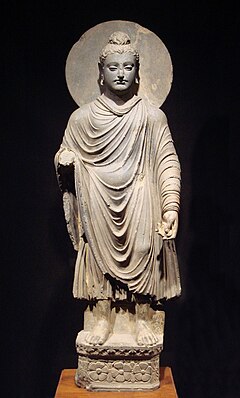
Dirk Beyer, CC BY-SA 3.0 <http://creativecommons.org/licenses/by-sa/3.0/>, via Wikimedia Commons

© Darrell Arnold Ph.D.– (Reprinted with Permission)
https://darrellarnold.com/2018/09/02/hindu-and-buddhist-thought-2/

Buddhist Metaphysics

While some strands of Buddhism have very thick metaphysics, there are some forms with an extremely pragmatic orientation and a general focus on practices. Buddhism rejects that there is an all-powerful, all-knowing creator God. Continue reading Buddhist Metaphyics, Epistmology and Ethics →

The Basics of Buddhism

BUddhist

Dirk Beyer, CC BY-SA 3.0 <http://creativecommons.org/licenses/by-sa/3.0/>, via Wikimedia Commons

© Darrell Arnold Ph.D.– (Reprinted with Permission)

Buddhist philosophy originates with Siddhartha Gautama. The Buddha’s life itself weaves an interesting philosophic narrative. According to tradition, he was born the son of a king in the Magda empire of Ancient India or present-day Nepal. He was raised a prince but eventually turned away from the life of politics that his father had envisaged for him in order to pursue a life of spirituality. Continue reading The Basics of Buddhism →

Review of Robert Wright’s, Why Buddhism is True


Robert Wright is one of my favorite authors, and I have previously read his books: Continue reading Review of Robert Wright’s, Why Buddhism is True →

Summary of Buddhism on Human Nature

standing Buddha statue with draped garmet and halo

Buddhism: In The Footsteps of the Buddha

(This is a summary of and commentary on a chapter in a book I often used in university classes: Thirteen Theories of Human Nature.) 

Continue reading Summary of Buddhism on Human Nature →