 Euler diagram representing a definition of knowledge**
I finished my last post with the phrase “So much to learn, so little time.” I wanted to elaborate. Continue reading So Little Time To Learn
© Darrell Arnold Ph.D.– (Reprinted with Permission)
Joseph Uscinski’s Conspiracy Theories: A Primer
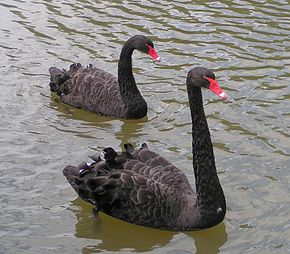 The observation of a black swan falsifies the hypothesis “All swans are white”.
In a recent post, Professor Darrell Arnold introduced the idea of a non-falsifiable belief or hypothesis. I would like to briefly and simply explain this important concept. Continue reading Why Non-Falsifiable Beliefs Are Vacuous
“I know how unfashionable it is now to acknowledge in life or history any genius loftier than ourselves. Our democratic dogma has leveled not only all voters but all leaders; we delight to show that living geniuses are only mediocrities, and that dead ones are myths. … Since it is contrary to good manners to exalt ourselves, we achieve the same result by slyly indicating how inferior are the great men of the earth.” ~ Will Durant (The Greatest Minds and Ideas of All Time
 Rene Descartes
There are many reasons we might want to philosophize—to become better people, gain self-knowledge, understand the history of thought, etc. But I was drawn to philosophy because I wanted to know, as far as is possible, what was true. This sentiment echoes the first sentence of the first book in my very first college philosophy class, way back in 1973. Continue reading Can We Know Anything with Certainty?
